12V 70Ah -40°C LiFePO4 Battery Pack Guide

TL;DR
- Discharges at -40°C, charges at -30°C — zero external heating (Spec WTS-L-01207101, Section 3)
- ≥90% capacity at -40°C versus 25°C baseline (Spec Section 6.4)
- 1,500+ cycles before hitting 80% capacity (Spec Section 6.4)
- Integrated PCM covers overcharge, over-discharge, overcurrent, short-circuit, and thermal cutoff (Spec Section 4)
Why Standard Batteries Fail in Extreme Cold
Below -20°C, standard LiFePO4 cells lose 40-50% of their rated capacity. The electrolyte thickens. Internal resistance doubles or triples, and the pack can no longer deliver its nameplate current.
The conventional fix? Bolt on a heating system. That adds 1-3 kg of dead weight, draws power from the pack it's supposed to protect, and introduces a new failure mode. I've seen heating elements fail silently in the field — the battery then charges at sub-zero temperatures, lithium plates onto the anode, and the cells die within two winters.
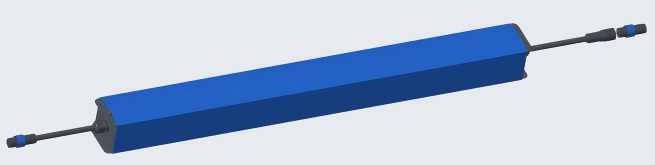
A 12V 70Ah -40°C Low-Temperature LiFePO4 Battery Pack sidesteps that problem at the cell chemistry level. Specialized low-temperature electrolytes maintain ionic conductivity down to -40°C, eliminating the heating subsystem entirely. This article breaks down the Wiltson Energy 12.8V/71.4Ah unit (Spec WTS-L-01207101) — what it delivers, where it falls short, and how to specify it correctly.
Key Specifications
Every number below traces back to product specification WTS-L-01207101, Section 3. No estimates, no “typical values.”
Source: Spec WTS-L-01207101, Section 3
| Parameter | Value |
|---|---|
| Nominal Voltage | 12.8V |
| Nominal Capacity | 71.4Ah (~914Wh) |
| Chemistry | LiFePO4 (Low-Temperature Grade) |
| Max Continuous Current | ≤15A (charge and discharge) |
| Charging Temperature | -30°C to +60°C |
| Discharging Temperature | -40°C to +60°C |
| Internal Resistance | ≤150mΩ (AC 1kHz) |
| Weight | ≈10.2kg |
| Dimensions | 888 × 84.8 × 82.8 mm (±2) |
Low-Temperature Performance
Cold claims are cheap. Tested data costs money. Here's what the lab reports show (Spec Section 6.4):
| Temperature | Capacity vs. 25°C | Test Conditions |
|---|---|---|
| -40°C | ≥90% | CC 1C discharge to 1.5V, 16-24h soak |
| -20°C | ≥90% | CC 1C discharge to 2.0V, 16-24h soak |
| +60°C | ≥98% | CC 1C discharge to 2.0V |
≥90% at -40°C. That's the number that matters. Standard LiFePO4 cells deliver 40-60% at the same temperature. The gap is not incremental.
Non-negotiable: Cutoff voltage drops from 2.0V to 1.5V per cell below -20°C (Spec Section 6.3). Configure your BMS accordingly, or you’ll leave usable energy stranded in the pack.
Charging in Cold
Charge current derates sharply with temperature (Spec Section 6.3). Miss this, and you'll plate lithium onto the anode:
- ≥0°C: Up to 3.0C
- ≤0°C: 0.5C
- ≤-20°C: 0.2C
Size your solar controller or charger for the derated current — not the room-temperature maximum. Get this wrong, and the cells won't survive two winters.
BMS and Safety Features
The integrated PCM delivers six protection layers (Spec Section 4). Here's what triggers and what recovers:
| Protection | Threshold | Recovery |
|---|---|---|
| Overcharge | 3.75±0.05V/cell | 3.5±0.1V |
| Over-discharge | 2.2±0.1V/cell | 2.7±0.1V |
| Overcurrent | 50±10A | Auto |
| Short Circuit | 200±20A, ≤1200μs | Auto |
| Temperature | 65°C±5°C | 48°C±10°C |
| Cell Balance | 3.6V±0.05V start | 58±10mA |
Common Mistake: Pairing premium low-temp cells with a generic BMS. I've seen it happen. The BMS allows full-rate charging at -15°C, lithium plates onto the anode, and cells that cost ten times the BMS savings die within two winters. Your BMS must enforce cold-charge derating — no exceptions.
The cells cleared the full safety gauntlet: short circuit at 200±20A, overcharge at 10A/10V for 7 hours, forced discharge to 0V, 130°C heating for 30 minutes, 1-meter drop, vibration sweep at 10-55Hz, and temperature shock from -20°C to +65°C across 9 cycles. No fire. No explosion. No leakage (Spec Sections 6.5-6.6).
Applications
Where does a 12V 70Ah -40°C Low-Temperature LiFePO4 Battery Pack with ~914Wh belong? Projects where cold-start failure means downtime, lost data, or safety risk:
- Solar street lighting in subarctic and northern climates
- Remote telecom stations in Arctic or high-altitude sites where maintenance visits cost thousands per trip
- Cold-chain logistics — GPS and sensor modules on refrigerated trucks that must power on at -30°C
- Military field equipment requiring instant power-on in any climate
- Off-grid weather stations running unattended through months of polar winter
Conclusion
The Wiltson Energy 12.8V/71.4Ah pack delivers what most cold-weather batteries promise but can't prove: ≥90% capacity at -40°C, 1,500+ cycles, and six-layer protection — all without external heating (Spec WTS-L-01207101).
I recommend this pack for any project where the operating floor drops below -20°C and system simplicity matters. Two things to get right: confirm your BMS enforces cold-charge derating, and size your charger for the derated current at your lowest expected temperature.
FAQ
Can this battery charge at -40°C?
No. The charging floor sits at -30°C (Spec Section 3). Below -20°C, charge current drops to 0.2C maximum (Spec Section 6.3). Attempting to charge below -30°C risks lithium plating and permanent cell damage.
How much capacity remains usable at -40°C?
≥90% of the 25°C baseline (Spec Section 6.4). On a 71.4Ah pack, that translates to ≥64Ah of usable energy. Note: cutoff voltage shifts from 2.0V to 1.5V per cell below -20°C (Spec Section 6.3). Your BMS must accommodate this.
What is the expected cycle life?
≥1,500 cycles to 80% remaining capacity at 0.5C charge/discharge, 25°C (Spec Section 6.4). Cycle life under sustained sub-zero operation is not separately specified — verify with Wiltson Energy for your operating profile.
Does the pack include cell balancing?
Yes. Charge-mode balancing triggers at 3.6V±0.05V with 58±10mA balancing current (Spec Section 4). This prevents cell drift across the series configuration.
What safety tests has this pack passed?
Seven categories: short circuit (200±20A), overcharge (10A/10V for 7 hours), forced discharge to 0V, 130°C heating for 30 minutes, 1-meter drop, vibration sweep (10-55Hz), and temperature shock (-20°C to +65°C, 9 cycles). No fire, no explosion, no leakage across all tests (Spec Sections 6.5-6.6).
How should I store this battery long-term?
Keep between -20°C and +25°C, below 75% relative humidity, at roughly 50% state of charge. Under these conditions, capacity loss stays below 10% over 12 months (Spec Section 6.3). Recharge every 6 months to prevent over-discharge degradation (Spec Section 9).
Next Steps
Need a 12V 70Ah -40°C Low-Temperature LiFePO4 Battery Pack engineered for your project?
Wiltson Energy's team can:
- Evaluate your temperature range and capacity requirements against tested data
- Customize pack voltage, capacity, and form factor for your enclosure
- Provide samples for independent lab testing before you commit to volume