
Technical Guide
OEM-ready LiFePO4 packs for cold weather: a lithium-ion chemistry that charges at -30°C without heating elements and holds over 90% capacity down to -40°C discharge. Trusted by solar, cold chain, and arctic robotics partners worldwide.
See how Wiltson Energy low-temperature technology outperforms standard LFP batteries in harsh environments.
at -40°C (-40°F)
≥90%
Wiltson LT
Heated packs cannot discharge at -40°C without pre-heating.
at -30°C (-22°F)
2 hrs
Wiltson LT
Heated packs require 5 hrs heating + 2 hrs charging.
at -40°C (-40°F)
3C
Wiltson LT
15x higher discharge rate for demanding applications. (C-rate: 1C discharges the full capacity in one hour.)
Wiltson LT vs. Heated Packs — Full Comparison
| Dimension | Wiltson LT (No Heater) | Self-Heating Pack |
|---|---|---|
| Discharge at -40°C | ≥90% capacity, instantly | 0% until pre-heated |
| Charge at -30°C | Direct charge, ~2 hrs | ~5 hrs pre-heat + ~2 hrs charge |
| Warm-up delay | None | Up to 5 hours |
| Heater energy draw | None | ~15% of pack capacity per charge |
| Extra weight | None | +2.5 kg per pack (avg.) |
| Discharge rate at -40°C | 3C | 0.2C |
Heated-pack values represent typical self-heating LiFePO4 packs of comparable capacity. Heater energy draw and added weight vary with pack size and enclosure; ask our engineering team for figures matched to your configuration.
Every cold-capable LiFePO4 pack on the market follows one of three design routes. Only one removes the heater, the wait, and the energy penalty entirely.
| Design Route | Charging Limit | Warm-up Delay | Energy Overhead | Extra Weight |
|---|---|---|---|---|
| Low-Temperature Cut-off (standard BMS) | 0°C — charging blocked below freezing | None, but the pack cannot charge until it warms up | None | None |
| Self-Heating Pack | Down to about -20°C to -30°C, after pre-heating | Up to 5 hours | ~15% of pack capacity per charge | +2.5 kg per pack (avg.) |
| Heater-Free LT Cell (Wiltson) | -30°C direct charge, no heater | None | None | None |
Self-heating and cut-off values represent typical market configurations of comparable capacity. Actual figures vary with pack size, enclosure, and BMS tuning.
Three engineering layers in our LT cell platform eliminate heating elements, warm-up delays, and parasitic energy loss.
A proprietary low-viscosity electrolyte formulation keeps lithium ions mobile down to -30°C, so the cell accepts charge where standard electrolytes turn highly resistive.
Low-impedance electrode coatings and a modified graphite anode suppress lithium plating during sub-zero charging — the root cause of permanent capacity loss in standard LiFePO4 cells.
The integrated BMS applies temperature-compensated charge limits — 0.5C below 0°C and 0.2C below -20°C — so cells charge safely across the full -30°C to +60°C window with no pre-heating stage.
Measured on our IFR26650LT 3.4Ah low-temperature cell in environmental chamber testing.
Discharge capacity retention vs. 25°C (1C discharge)
| Temperature | Capacity Retention |
|---|---|
| +60°C | ≥ 98% |
| +25°C | 100% |
| -20°C | ≥ 90% |
| -40°C | ≥ 90% |
Maximum charge current by cell temperature
| Temperature | Max Charge Current |
|---|---|
| ≥ 0°C | 3.0C |
| ≤ 0°C | 0.5C |
| ≤ -20°C | 0.2C |
0.5C charge / 0.5C discharge at 100% DOD (depth of discharge), 25°C. Cold-operation cycle data available per model in the official datasheet.
≥80% after 1,500 cycles
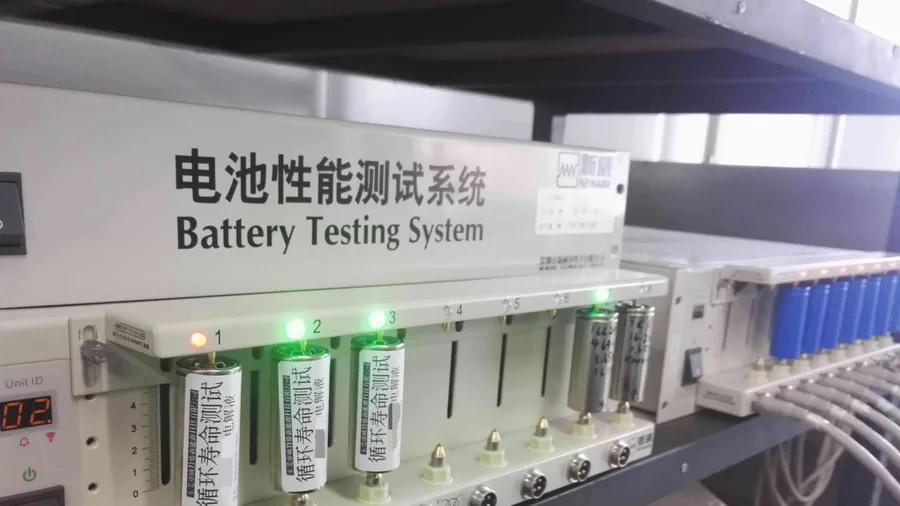
Cell-level values verified in environmental chamber testing per Wiltson specification WTS-L-01207101. Pack-level ratings are confirmed per model in the official datasheet before shipment.
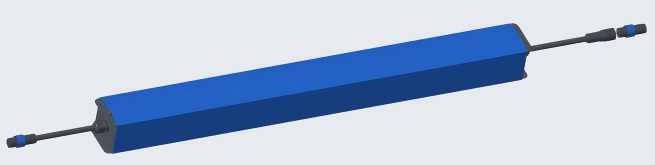
Production-proven pack configurations built on our IFR26650LT low-temperature cell platform.

Low-Temperature LiFePO4 Battery Pack

Low-Temperature LiFePO4 Battery Pack

Low-Temperature LiFePO4 Battery Pack

Low-Temperature LiFePO4 Battery Pack

Low-Temperature LiFePO4 Battery Pack

Low-Temperature LiFePO4 Battery Pack
| Model | Configuration | Voltage | Capacity | Max Charge | Max Discharge | Weight | Dimensions (mm) |
|---|---|---|---|---|---|---|---|
| 12.8V 3.4Ah | 4S1P | 12.8V | 3.4Ah | 2A | 2A | <0.37 kg | 135×53×31 |
| 12.8V 10Ah | 4S3P | 12.8V | 10Ah | 6A | 6A | <1.1 kg | 160×75×55 |
| 12.8V 28.8Ah | 4S9P | 12.8V | 28.8Ah | 10A | 10A | <3.2 kg | 246×108×68 |
| 12.8V 32Ah | 4S10P | 12.8V | 32Ah | 10A | 10A | <3.6 kg | 275×110×70 |
| 12.8V 43Ah | 4S13P | 12.8V | 43Ah | 20A | 20A | ≈8.5 kg | 340×220×85 |
| 12.8V 60Ah | 4S19P | 12.8V | 60Ah | 60A | 60A | <8.5 kg | 260×168×209 |
| 12.8V 71.4Ah | 4S21P | 12.8V | 71.4Ah | 15A | 15A | ≈10.2 kg | 888×84.8×82.8 |
| 12.8V 100Ah | 4S30P | 12.8V | 100Ah | 100A | 100A | ≈13.3 kg | 329×172×219 |
| 25.6V 3.4Ah | 8S1P | 25.6V | 3.4Ah | 3.4A | 6A | <0.8 kg | 114×78×68 |
| 25.6V 20.4Ah | 8S6P | 25.6V | 20.4Ah | 20A | 20A | ≤4.7 kg | 226×171×72 |
| 25.6V 40.8Ah | 8S12P | 25.6V | 40.8Ah | 40A | 40A | ≈9.5 kg | 340×227×72 |
| 25.6V 80Ah | 8S24P | 25.6V | 80Ah | 50A | 50A | <23 kg | 522×240×218 |
All models: charge from -30°C to +45°C, discharge from -40°C to +60°C. Reduced charge current is recommended below 0°C — see the model datasheet for exact limits. Config codes: 4S21P = 4 cells in series × 21 in parallel.
Need a different voltage, capacity, or form factor? We engineer custom packs from 3.2V to 72V+ and 1Ah to 500Ah+.
A straightforward OEM engagement path — most projects move from first inquiry to a production quote in under two weeks.
01
Order 1–10 evaluation units of any standard LT model. Samples ship in 7–14 business days, tested to IEC 62133 and UN38.3.
02
Every model has a chamber-tested datasheet — capacity retention at -20°C and -40°C, charge limits, cycle life. We share it with your inquiry, not as a public download.
03
Voltage 3.2V–72V+, capacity 1Ah–500Ah+, form factor, connectors, and BMS protocol matched to your product. Engineering review within 24 hours.
04
Standard lead time is 4–6 weeks after design confirmation and deposit. Rush production (2–3 weeks) is available for select configurations.
From arctic research stations to cold-chain logistics, our LiFePO4 batteries deliver rated capacity at -40 °C — without heating elements or warm-up delays.
Conventional lithium cells in solar street and garden lights lose 60%+ capacity in sub-zero winters, causing lights to dim or fail during the longest, coldest nights of the year.
Wireless environmental sensors on mountain tops and tundra drain batteries 3× faster in arctic climates, forcing costly helicopter maintenance visits to inaccessible locations.
Single-axis and dual-axis solar trackers require reliable actuator power through winter nights at -30 °C. Standard batteries freeze and cause tracker lock-up, losing days of energy yield.
Obstruction lights on wind turbines and towers and marine navigation beacons must remain lit through polar winters. Battery failure creates critical safety hazards for aircraft and vessels.
Off-grid surveillance cameras and perimeter sensors in cold regions lose connectivity when batteries degrade below -20 °C, creating undetected security blind spots at exactly the time they are most needed.
Fault detection units and smart meters along high-voltage transmission lines in northern regions need backup power that survives -40 °C — standard cells cause false readings and missed fault events.
UL924-compliant emergency and exit lighting in cold-storage warehouses, parking garages, and outdoor facilities must activate instantly at -30 °C — and accept recharge immediately after. Cells that need hours of pre-heating before they can charge fail the availability test.
Unmanned base stations and tower backup systems in northern climates must recharge the moment power returns after a winter outage. Packs that require pre-heating delay service restoration by hours — heater-free LT cells accept charge at -30 °C immediately.
Drilling equipment and pipeline monitoring systems in Siberia or northern Canada require batteries that operate reliably at -40 °C — where conventional cells freeze and fail within hours.
Field spectrometers, data loggers, and portable lab instruments used in polar expeditions and high-altitude research demand stable voltage output at -40 °C to maintain measurement accuracy.
Additional certifications available upon request
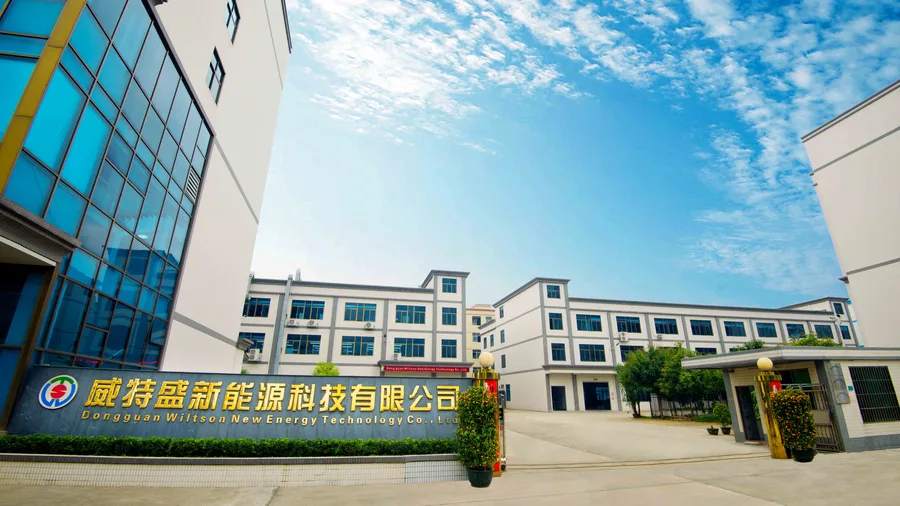
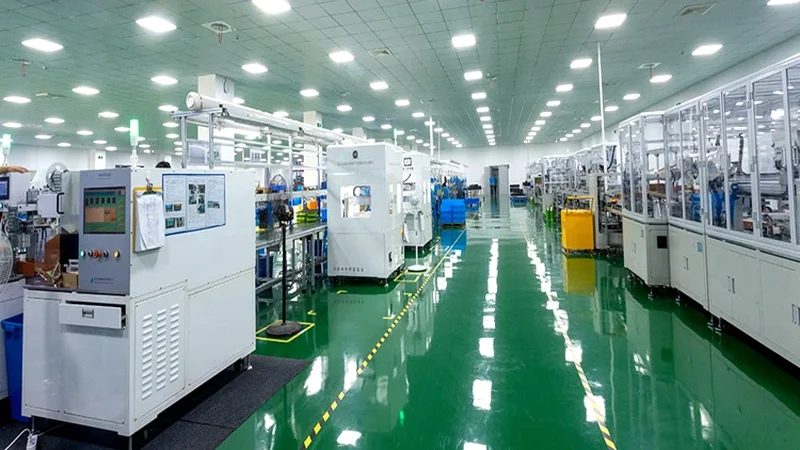
Cell sorting, pack assembly and environmental-chamber testing run on one site in Guangdong.
Everything you need to know about our low-temperature LiFePO4 battery packs for OEM partnerships.
Our standard MOQ is 50 units for custom battery packs. For evaluation and testing, we offer sample orders of 1–10 units. Contact our team to discuss your specific volume requirements.
Yes. We provide pre-production samples within 7–14 business days. Samples are fully tested to IEC 62133 and UN38.3 standards. NRE fees may apply depending on customization complexity.
Our LiFePO4 battery packs can pass CE, CB, UN38.3, UL1642, REACH, and RoHS certifications. System-level standards such as IEC 62619 and IEC 62620, as well as other market-specific certifications, are available upon request.
Standard lead time is 4–6 weeks after design confirmation and deposit receipt. Rush production (2–3 weeks) is available for select configurations.
Absolutely. We engineer battery packs to your exact voltage (3.2V to 72V+), capacity (1Ah to 500Ah+), form factor, and connector requirements. Our engineering team will review your specs within 24 hours.
Two things happen, and only one of them is reversible. Discharging in the cold raises internal resistance and electrolyte viscosity, so the pack delivers less capacity and sags harder under load; that loss returns once the cell warms up. Charging in the cold is the damaging one: below roughly 0°C, lithium deposits as metal on the anode surface instead of intercalating into it, permanently removing capacity and creating an internal short-circuit risk. That is why nearly every standard pack, LiFePO4 included, ships with a BMS that refuses to charge below freezing.
Yes. LiFePO4 (lithium iron phosphate, or LFP) is one of several lithium-ion chemistries; what differs from the NMC and LCO cells common in consumer electronics is the cathode material, which gives LFP a flatter discharge curve, better thermal stability, and longer cycle life in exchange for some energy density. Every lithium-ion chemistry shares the same cold-charging limitation, so specifying LFP does not by itself make a pack cold-capable. What makes ours cold-capable is the electrolyte formulation, the anode design, and the BMS charge logic, not the cathode.
For charging, 0°C is a hard line on most standard packs: the BMS simply refuses below it. Discharge has no single cutoff, but usable capacity and available current fall away steeply below about -10°C, and at -40°C a standard LFP cell is limited to roughly 0.2C, too little for most motors, compressors, and transmitters. Our LT platform is specified for discharge from -40°C to +60°C at up to 3C and charging from -30°C to +60°C, with at least 90% capacity retention at -40°C measured against 25°C.
Our low-temperature LiFePO4 packs are guaranteed for discharge operation from -40°C to +60°C. Charge operation is supported from -30°C to +60°C. All specifications are verified through environmental chamber testing.
Below freezing, ionic conductivity in a standard electrolyte drops sharply, and lithium ions deposit as metallic lithium on the anode surface instead of intercalating into it — a phenomenon called lithium plating. It permanently reduces capacity and can create internal short-circuit risks, which is why standard packs block charging below 0°C. Our LT cells combine a low-temperature electrolyte with an anti-plating anode design that keeps ions mobile down to -30°C, enabling safe charging without heaters.
Every model ships with a datasheet based on environmental chamber testing — including capacity retention at -20°C and -40°C (≥90% vs. 25°C on our IFR26650LT platform), temperature-compensated charge limits, and cycle-life data (≥80% after 1,500 cycles). We recommend starting with a 1–10 unit sample order for your own chamber validation before scaling to production volumes.
Our LT platform is rated for discharge from -40°C to +60°C and charging from -30°C to +60°C; the underlying LT cell can discharge down to -50°C at reduced current. For sustained operation beyond these limits, talk to our engineering team — options include insulated enclosures, alternative cell chemistries, or hybrid thermal designs matched to your duty cycle.
Still have questions?
Technical Guide
Technical Guide
Technical Guide
Submit your requirements and our engineering team will respond within 24 hours.